
Drainage Solutions for a Central Iowa Property That Won’t Dry Out
Overview
Watching your lawn hold water long after a storm leaves you with an obvious problem and no clear answers. Searching for lawn drainage ideas usually just turns up photos of pristine, finished landscapes, offering zero insight into whether your soggy lawn requires a quick DIY fix, a weekend with a shovel, or heavy excavation. It isn’t even clear which type of contractor you are supposed to call, a frustration that causes many homeowners to stall their decision for months while the mud persists.
This guide cuts through that confusion. It breaks down the essential drainage terminology, explains exactly how surface and ground water move across a lot, and outlines the most effective, permanent fixes for each specific issue. You will learn how to determine if a wet spot is an actual threat to your property, the best times of year to tackle the work, and exactly how to vet the professionals you bring out for a quote. As a design-build landscaping and hardscaping company serving the greater Des Moines metro, we built this guide to tackle the specific lawn drainage realities of Central Iowa, helping you move past decision paralysis and finally reclaim your lawn.
Table of Contents
- Common Lawn Drainage Terms Explained
- Understanding Surface and Ground Water Flow
- When to Fix a Wet Lawn (And When to Wait)
- Common Lawn Drainage Solutions & Fixes
- How Seasonal Changes Impact Your Lawn’s Drainage
- How to Hire the Right Drainage Contractor
- What to Expect During a Site Visit
- Central Iowa’s Unique Drainage Challenges
- Schedule Your Lawn Drainage Assessment
Common Lawn Drainage Terms Explained
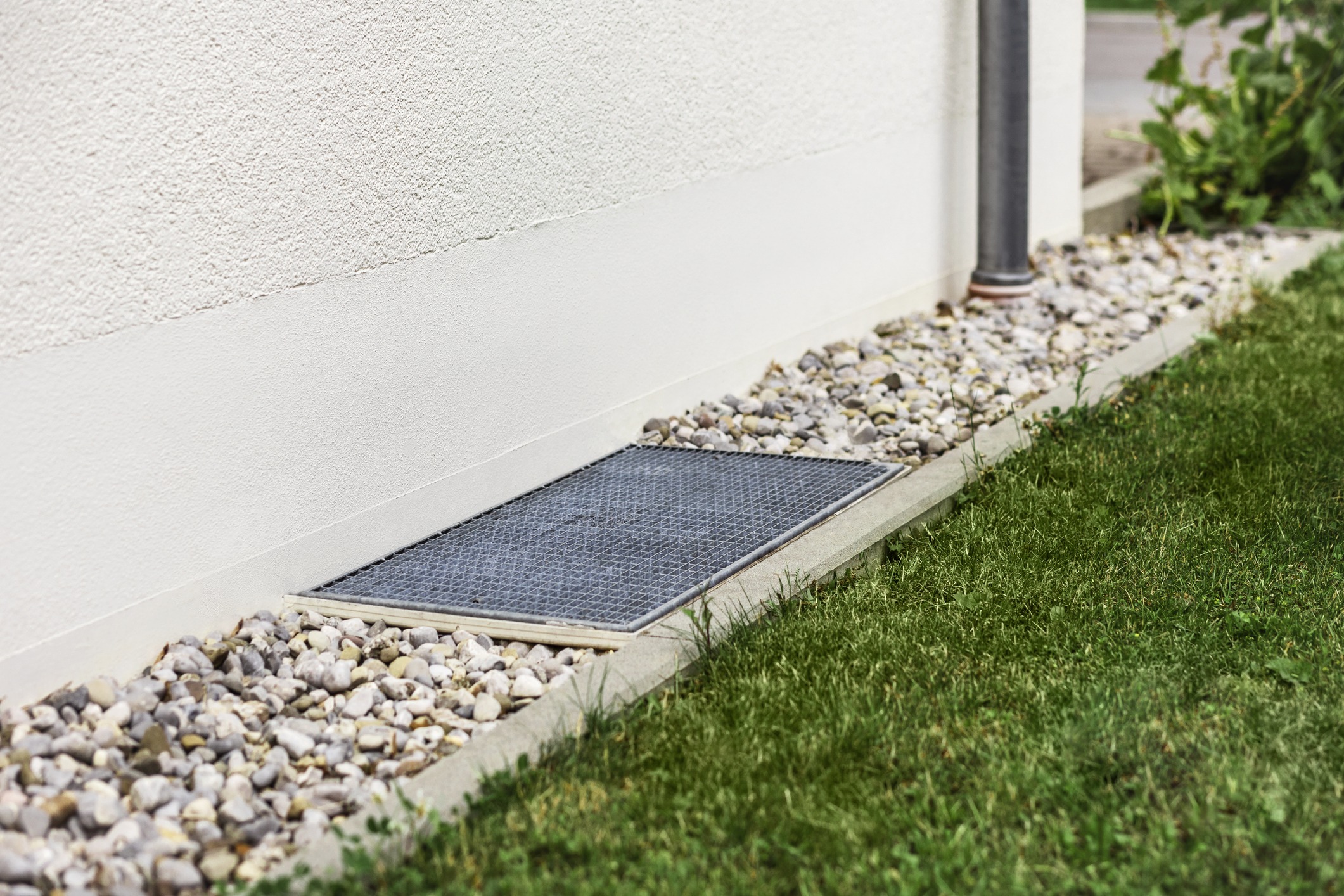
There are four main ground-level solutions for outdoor property drainage. While people often use them interchangeably, they actually serve very different purposes. Knowing exactly what each one does makes understanding your lawn and any quotes you receive much easier.
- Swale: A shallow, gently shaped dip in the ground that carries surface water from one place to another. It is not a ditch, and it doesn’t involve buried pipes. A well-designed swale looks like a natural, subtle valley in the lawn that is wide enough to easily mow across. It strictly moves water that is running over the surface.
- Catch basin: A box set into the ground with a grate on top, placed at low points where surface water naturally collects. NDS, a leading maker of drainage products, describes catch basins as the perfect tool for capturing stormwater from lawns, under downspouts, patios, and walkways. The basin catches the surface water, and a connected underground pipe carries it away.
- French drain: A buried trench filled with gravel, containing a slotted pipe along the bottom. Unlike a swale or catch basin, it acts on water that has already soaked into the soil. The groundwater seeps out of the saturated soil, flows through the gravel, and enters the pipe through its slots, which then carries it to a lower discharge point.
- Drain tile*: This connects your roof gutters to buried PVC or perforated tile and carries water to a designated exit point. It’s the most effective way to safely carry water away from your home underground. This piping can sometimes carry water 50 or even a hundred feet away from the home, protecting your home, basement and foundations.
The most important distinction here is how each solution deals with different parts of the problem. Swales and catch basins help deal with water at the surface level. French drains and drain tile are buried, helping move water away from the home underground. There’s a time and place for each solution, and every yard is different. This is why a solution that worked perfectly on your neighbor’s property might not solve the problem on yours.
*This is called “tile” because back in the day, farmers used to build them out of tile. These days, piping is made of modern, durable PVC material.
Understanding Surface and Ground Water Flow
Water on your property comes from two main sources, and figuring out which one is causing your problem is half the battle. The first is how your soil handles the rain that falls directly on it. The second is water traveling from somewhere else and spilling onto your property.
Let’s start with the soil. Clay’s small particle size leaves very little pore space between particles, which impedes drainage and holds water much longer. This is the mechanism behind a lawn that stays soft and spongy for days after a storm. We find heavy clay to be a widespread problem across the Des Moines metro suburbs, but the reason is usually man-made rather than natural. During neighborhood construction, developers often sell off the rich black dirt, leaving homeowners with roughly six inches of good topsoil sitting over a thick layer of poor, heavily compacted material.
Now the water that arrives. Before we look at soil at all, we look at two things. The first is how the lot sits relative to the property next door. Where a neighbor’s home sits above yours, water runs down onto your lot by gravity, and no amount of soil improvement changes that. However, that does not mean you simply have to live with it. In these situations, we routinely work with both homeowners as a group, developing and executing solutions for both properties under separate contracts. Otherwise, much of the water crossing a lawn is simply starting on a neighboring lot and passing through.
Roof water is the second arrival, and it is larger than most people picture. Ranch homes carry extensive roof lines with limited gutters, so the roof sheds much of the water that lands on the lot. A large roof with few gutters delivers that water in concentrated streams at a handful of points. It does not spread across the lawn the way rainfall does. That concentration is often what turns a spot in the lawn into a spot that never dries.
Put those together and a picture emerges. Water lands on the lot, arrives from the roof, and arrives from higher ground next door. It runs across the surface until it reaches a low place. There it either soaks in, at whatever rate the soil allows, or it sits. Wet ground has more than one cause, and which one a lawn has decides which fix belongs there.
When to Fix a Wet Lawn (And When to Wait)
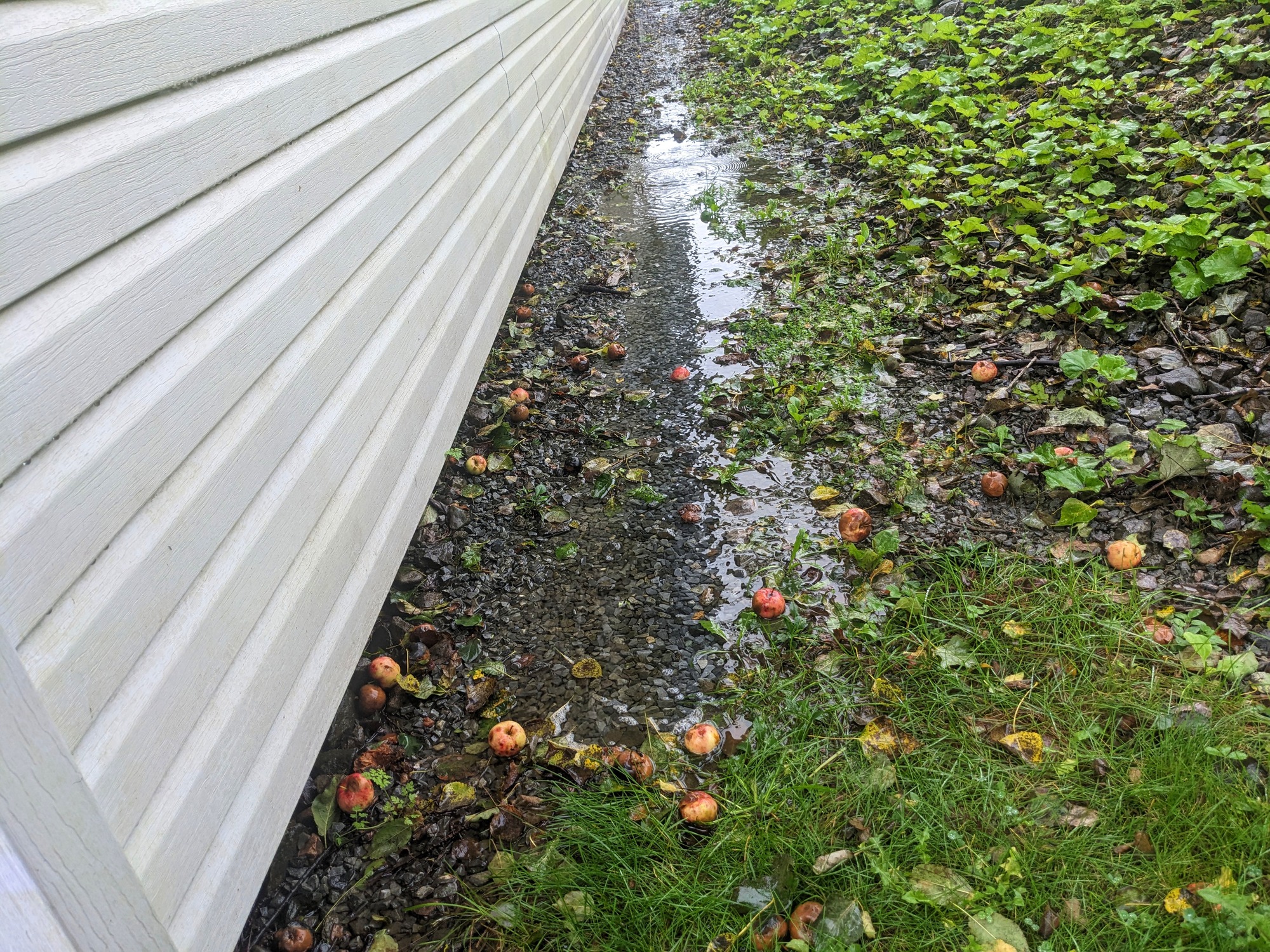
Not every wet spot needs a project. A low point in your lawn that stays soft and spongy for days after a heavy rain will eventually dry out. The judgment worth making is about where the water sits, how long it sits, and what it is sitting against.
Water standing against the house deserves attention first. The whole point of the ground around a foundation is to carry water away from the building rather than hold it there. Iowa’s adopted residential code sets a standard for how the ground must fall away from a foundation, and it does so at the state level. The requirement is the same in every community across the metro. We describe our own work as getting water away from the house instead of toward the basement and foundation.
Built structures in the lawn fall into the same category, and homeowners notice them later than they notice the house. A patio, a walkway or a retaining wall sits on a base of packed material. That base is what holds the surface flat and level over time. Water that collects at the edge of a patio, or gathers behind a wall, soaks into the ground those structures rely on. Wet ground under a paved surface does not hold it up the way firm ground does. What a homeowner sees is a paver that has dropped below its neighbors, a walkway with a dip in it, an open joint, or a wall that no longer runs straight along its top.
So the practical difference is between water that is inconvenient and water that is working on something. A wet stretch of lawn is inconvenient. Water pooling against the house is not. Neither is water sitting at the low edge of a patio after every rain, or standing where a walkway meets the lawn. That water has found a structure to act on, and it gets more expensive the longer it goes.
Water that sits out in the open lawn is the milder problem, and usually a question of use. Grass in a spot that stays soaked struggles, so the area thins and stays thin. Beds that hold water are hard to plant into. A soft area is hard to mow without tearing it up, and a family that wanted to use that part of the lawn cannot. None of that is an emergency. None of it improves on its own either, because the soil does not change its structure without help and the water keeps arriving at the same rate.
The season part of this cuts against what many homeowners in Iowa expect. The natural assumption is that the spring thaw is the worst of it, with frozen ground shedding meltwater onto a lawn that cannot take it. Our worst wet-lawn calls do not come then. They run all the way from March through to the end of the season. Heavy rains always lead to more calls. That is when a homeowner sees the problem at its clearest.
Walk the property during and right after rain. While we can’t work in downpours, the evidence you gather then will help us diagnose the problem and find the correct solution.
Common Lawn Drainage Solutions & Fixes
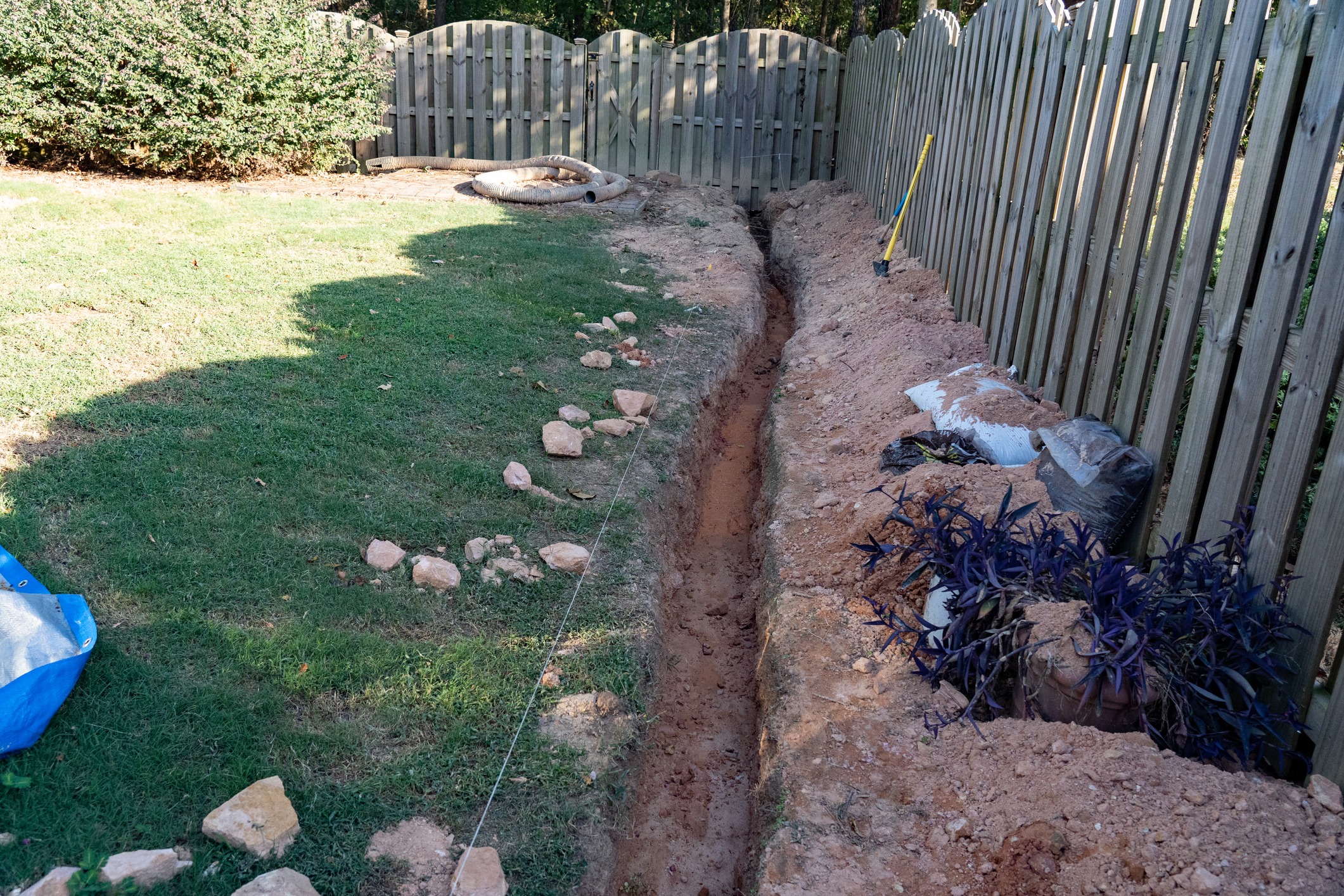
Drainage fixes fall into a handful of families. Most real lawns get a combination rather than a single item off this list, because the water usually has more than one origin. Comparing them in the abstract is less useful than it looks. Which one belongs on a property depends on what that property’s water is doing.
- Regrading. Regrading means reshaping the surface so water runs where you want it to go instead of where it goes now. It is the most direct fix available, and the one most likely to be right near a house.
- Swales. A swale is shaped grading with a route, carrying surface water along a set path to somewhere it can go. It stays mowable and planted, so it disappears into the lawn once the grass fills in.
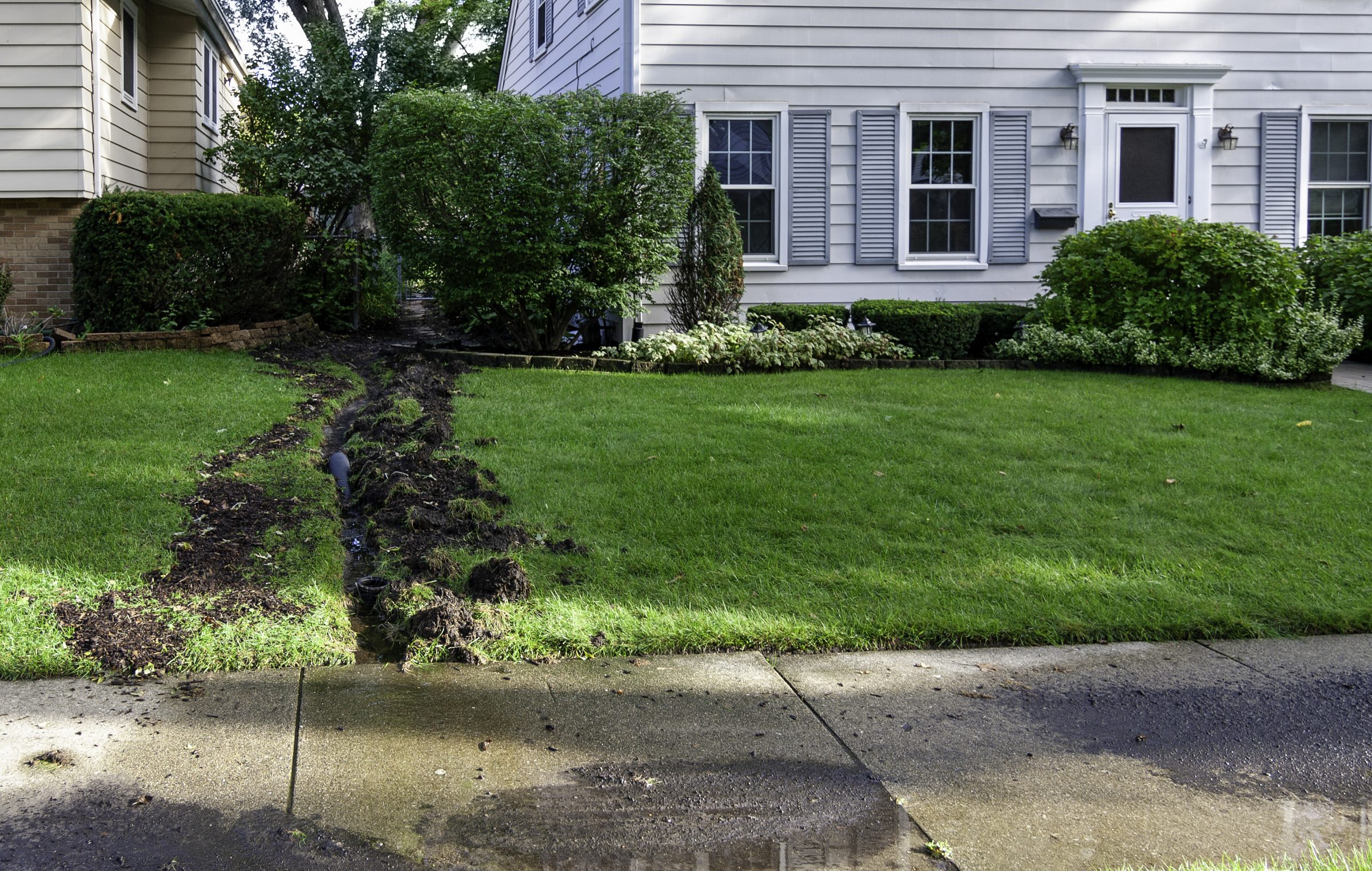
- French drains. A French drain takes on water that has already soaked into the soil. It gives that water an easy path through gravel into pipe and out to a discharge point. This is the fix for a soaked area rather than a puddled one.
- Catch basins and connected pipe. Where surface water collects at set points, a catch basin captures it and hands it to pipe. NDS names lawns, landscaped areas, downspout outlets, patios and walkways as the places its basins capture runoff. That is a fair summary of where this fix goes.
- Roof water management. A large roof with limited gutters delivers concentrated water to a small number of spots. Catching that water and carrying it away is often the highest-return change on a property.
- Soil improvement. For soil that will not take water fast enough, ISU Extension prescribes working two to four inches of compost into the top six to twelve inches of the soil. That improves the soil’s structure and aggregation. Better structure is what creates the pore space water travels through. This suits beds and planting areas more readily than an established lawn.
A homeowner can take on parts of this work, and plenty do. The heavier end involves excavation—typically digging to a working depth of 6 to 12 inches—holding a steady fall across a long run, and finding a legitimate discharge point. That last part is where the projects that fail usually fail. Finding a proper outlet often involves local municipal rules; for example, you will need to navigate local approvals if the project requires core drilling into city drainage. On the positive side, because stormwater management is a municipal priority, grants are available in the Des Moines area to help offset the cost of these fixes.
How Seasonal Changes Impact Your Lawn’s Drainage
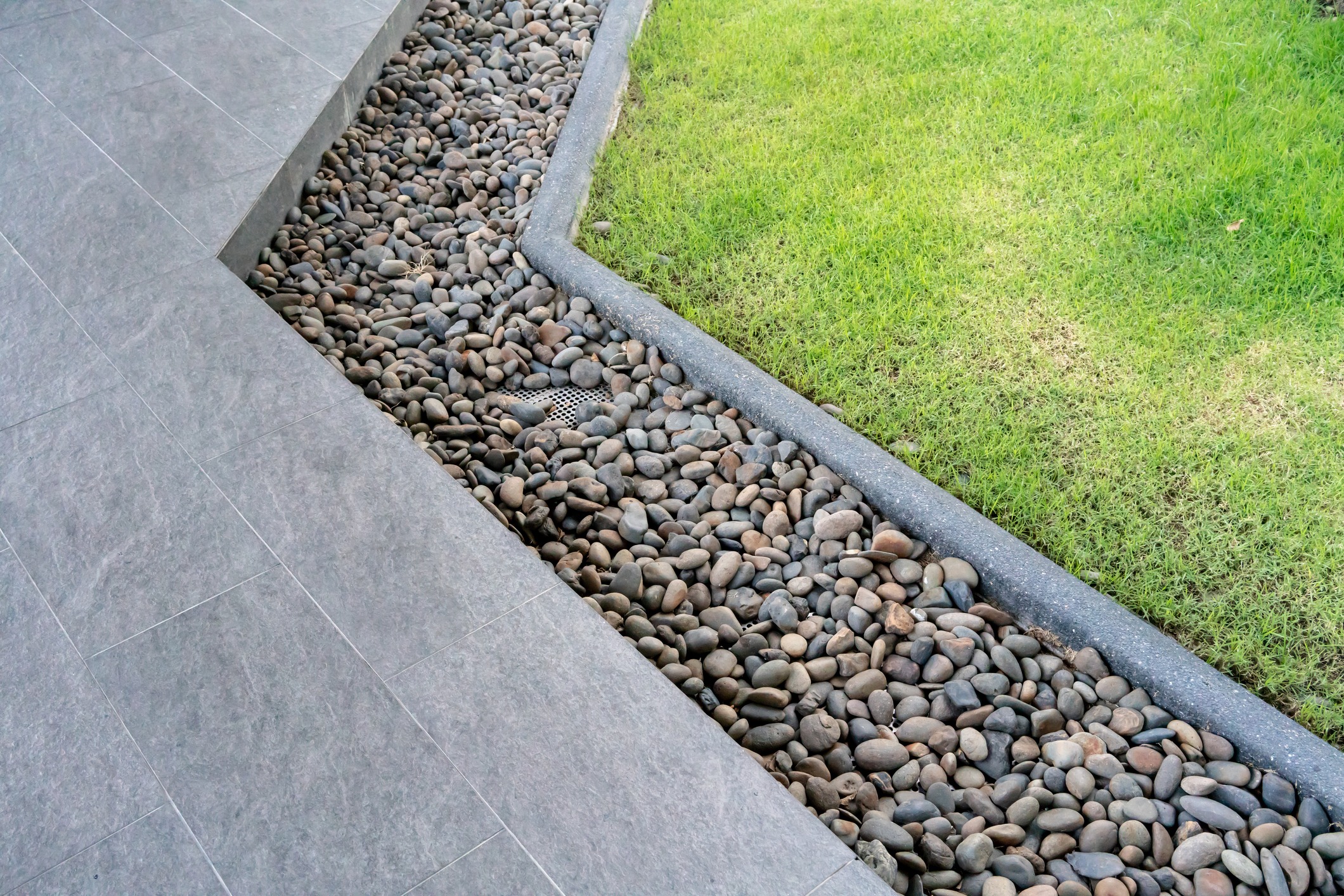
Drainage is not a separate system bolted onto a lawn. It is part of one system that the lawn grows in, plant beds sit in, and the patio is built on. Each part of that system can help reveal issues.
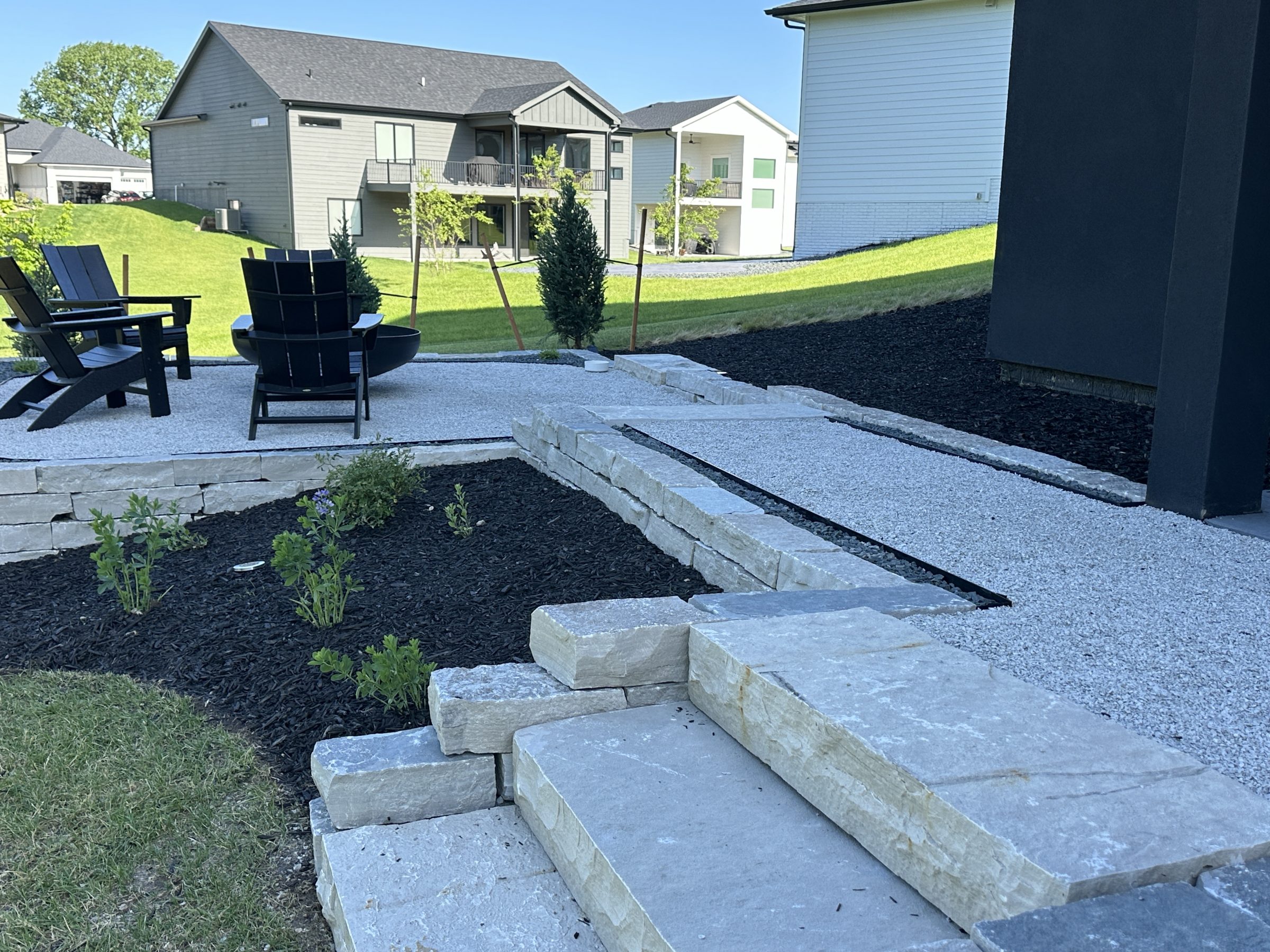
Hardscape and outdoor living: Patios, walkways, driveways and seating areas are surfaces water cannot soak into. Every drop that lands on them runs off somewhere, and that somewhere is the ground at their edges. So a paved area plays two roles at once. It acts as a barrier to water reaching the ground, sending it in a certain direction. This also means that installers can work with hardscaping, designing it to direct water along a predictable path, then attaching a solution to either catch or direct it away. A basin set at the low edge of a patio, tied into a drainage tile, can help prevent pooling water without adding an eyesore to the property.
The other half of the hardscape question is how the surface itself is graded. A patio built to shed water toward an outlet solves most of its own drainage. A patio built without that in mind simply causes water to pool, either on it or on the lawn next to it. This is why landscape design should always include a drainage plan. It is also why a design-build company looks at where water goes before deciding what the seating area should be made of.
Lawn: A lawn with pooling water won’t stay healthy for long and will also attract more mosquitoes, which breed in pools of water. Over the March-to-November rainy season, the lawn should be carefully monitored. Every time it rains, the lawn reveals where water goes and where it stalls. Pooling water might lead to thin turf if left untreated, requiring extra work to restore.
Beds. Planting beds sit at the foot of the house more often than not. That puts them exactly where water should be leaving rather than gathering. If roof runoff is dumping water onto planting beds, a downspout can be added to move that water further away.
From roughly November through March, drainage won’t be top of mind (unless there’s snow followed by a flash thaw). The ground is cold or frozen, the lawn is dormant, and the lawn is not being used, so a wet spot goes unnoticed, even when the water is there. That quiet stretch is misleading. A dry, hard March tells a homeowner almost nothing about how water will drain on their property. A property that seems fine all winter can be the same property that struggles in a July storm.
The wet season arrives with the growing season and runs through November. That is the stretch when a homeowner should be outside in the rain, noting where water arrives, where it runs, and where it stops. Fall is the useful moment in the cycle. The ground firms up, the lawn stops growing, and the summer’s evidence is still fresh. That makes it a sensible time to have work done, which the following summer will test. The winter months are a reasonable time to plan and to get a contractor out to look, even though the lawn gives away less than it did in July.
Once a system is in the ground, what keeps it working is the movement of water through gravel, pipe and openings. In a French drain, the gravel around the pipe filters debris and the landscape fabric holds back fine particles, which is what protects the pipe from clogging. The buried parts do their job as long as water can still get into them and out of them.
The checks are quick, and there are only a few of them. In spring, before the wet season starts, walk the system and clear grates and openings. Then confirm that the discharge point is open and not blocked by debris. During the March to November stretch, the real test is to look at the system while it is raining. Check that water is going where it should: through drains and out of exit points. In the fall, keep openings clear of fallen leaves.
Certain things should prompt a call rather than another season of watching. Water standing on top of a grate during rain means water is not getting in. An outlet that stays dry while the lawn is wet means water is not getting out. A fixed area that starts holding water again, a new wet spot where there was none, or soil and gravel showing up around a basin all suggest something changed underground. Water returning against the house or pooling at the edge of a patio is worth calling about promptly. That is water working on a structure again.
How to Hire the Right Drainage Contractor

Drainage work sits in an odd space between trades. Part of what makes hiring difficult is that several different kinds of company will answer the phone. The clearest way to think about it is by where the water is. We describe the boundary of our own work plainly. We get water away from the house instead of toward the basement and foundation, and basement structures belong to basement-repair contractors. In our own phrasing, we work above and the basement contractors work on the structures.
So a homeowner with water in the lawn, water against the house, or water running off a roof and a driveway is looking for a landscaping and hardscaping company. A homeowner with a cracked or leaking basement wall has a structural problem, and that is a different specialist. A property can have both. That is worth knowing before a site visit, because the lawn side and the structure side get quoted by different people.
When vetting a candidate, we highly recommend looking for these four credentials:
- A true design-build process: This means one company designs the solution and actually builds it, rather than handing a drawing off to a subcontractor or just improvising on site. Always ask how they arrive at a plan and who is directly responsible for it once the shovels hit the dirt.
- NDS Certification: NDS runs a rigorous contractor certification tied to its drainage products and training. (For example, our own experts attended the NDS Pro Drainage Course to ensure we are installing to manufacturer engineering standards).
- Local expertise and tenure: How long a contractor has worked locally directly translates to how many Central Iowa lots they have dug into. Because drainage behavior here depends heavily on how local subdivisions were graded and built, time spent on local properties is invaluable.
- High-quality materials: The materials a contractor uses for pipes, gravel, landscape fabric, and basins dictate how well the system will age. The components doing the filtering and carrying are usually the first to fail if the wrong ones are used. Asking exactly what materials go into the ground is a fair, necessary question.
What to Expect During a Site Visit
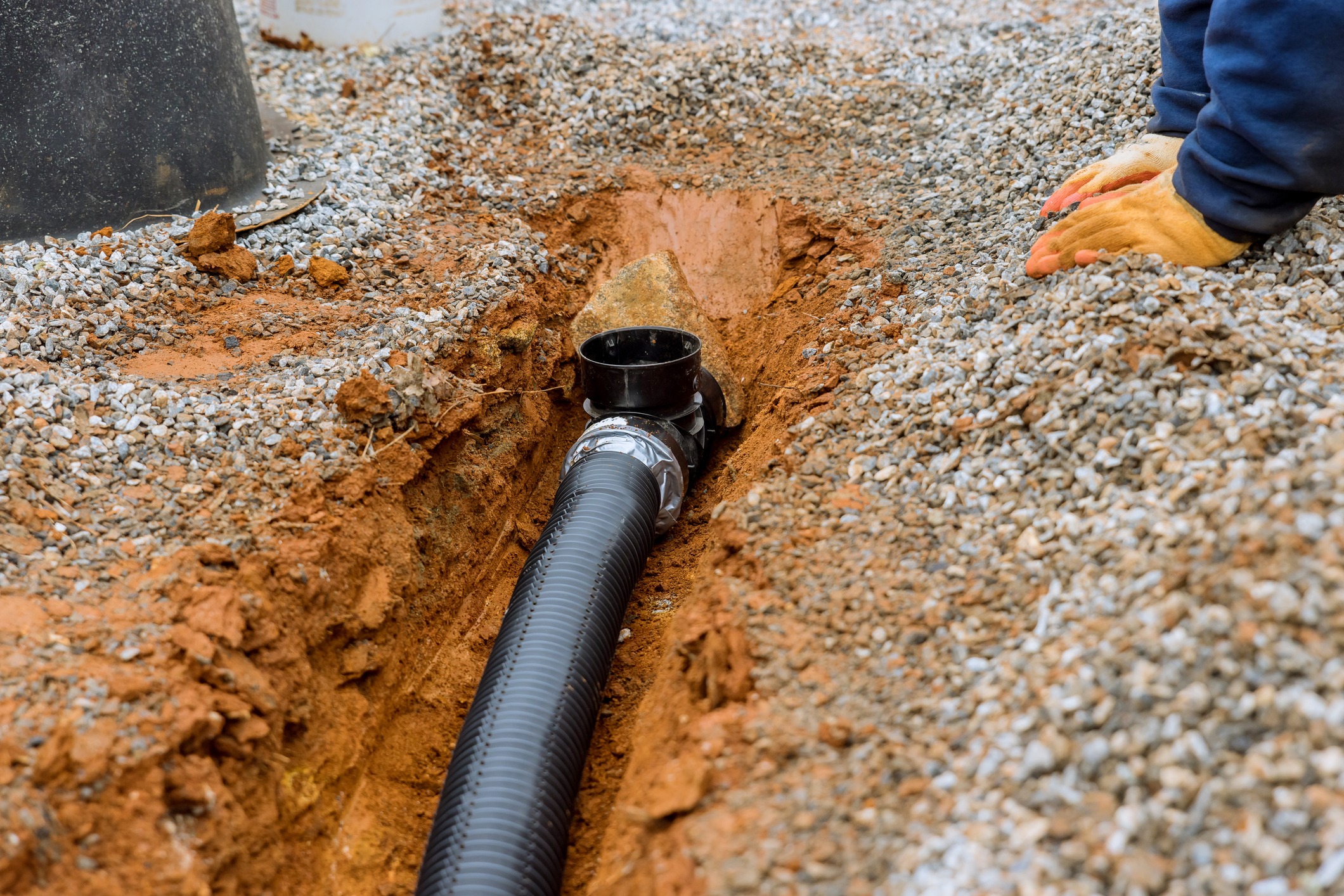
A drainage visit is mostly a reading of the property. Expect to spend it walking rather than sitting at a table. The purpose is to establish where the water comes from, where it goes, where it stops, and where it could go instead.
Rather than just staring at the muddy spot in the lawn, we start by looking at where the water is arriving from. The first question is how your lot sits relative to the property next door—if a home sits above yours, they are sending water down onto your ground before your soil even factors into the equation. The second question is how much roof runoff is draining onto the lot, and where it is concentrated. A classic ranch roof with limited gutters will dump a massive volume of water at just a few key points, often overwhelming the soil right next to the foundation.
From there the conversation moves to the ground. What is the soil doing with the water that lands on it? How much of the wet area is water sitting in the soil rather than standing on top of it? Those two conditions call for different fixes. The answer decides whether a project involves shaping the surface, putting pipe in the ground, or both.
The other thing a first visit has to settle is the outlet. Every fix described above ends at a discharge point, and finding a workable one is often the hardest part of the design. A homeowner can help by knowing where the low ground on their lot is, and where water leaves the property now.
It also helps to have watched the lawn during rain before the visit. Photos of standing water, a note of which downspouts run hardest, and an account of how long a spot stays wet all give a contractor what a dry-day walk cannot.
Central Iowa’s Unique Drainage Challenges
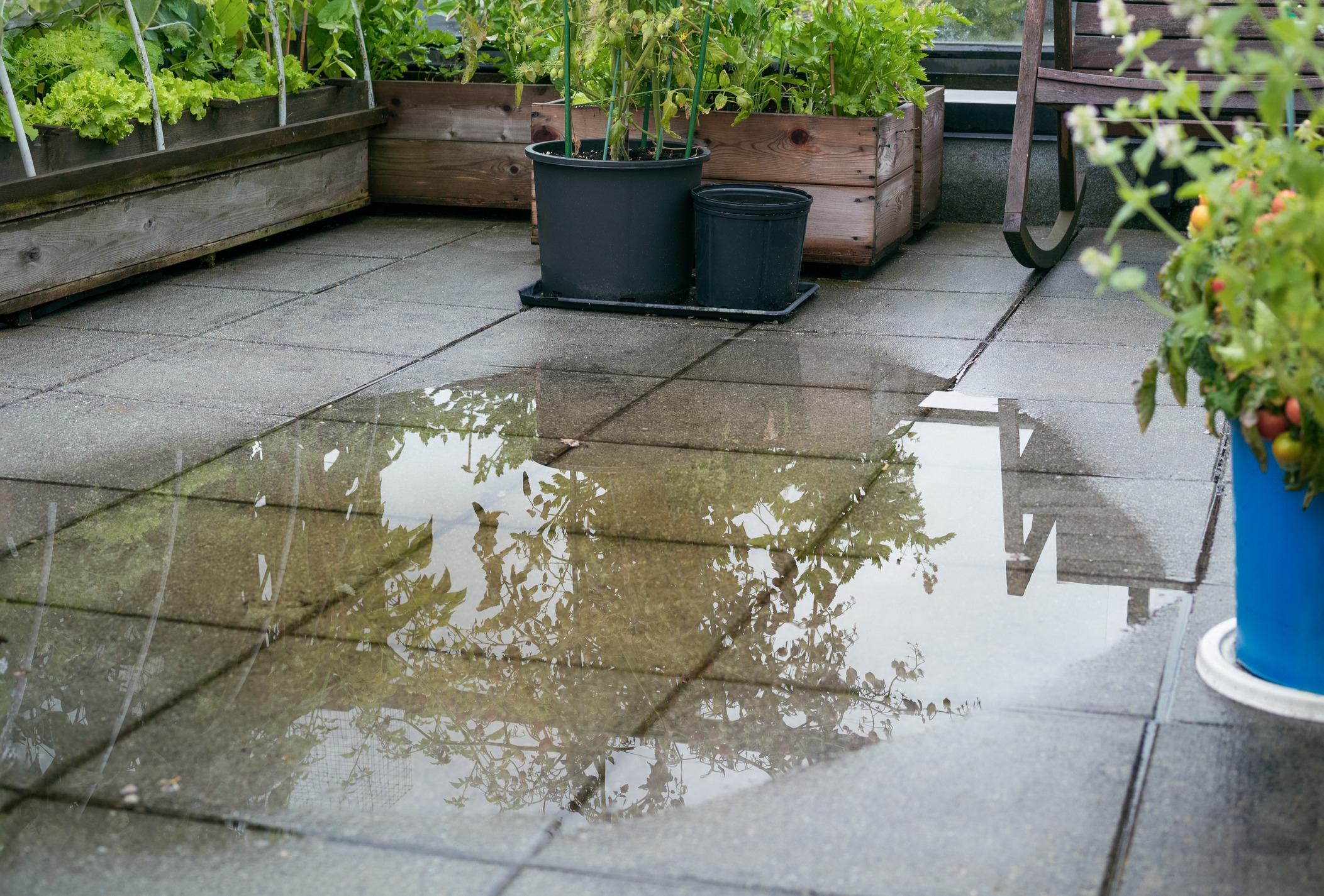
Three things make lawn drainage here its own subject rather than a generic one.
The first is the soil, and what happened to it during construction. ISU Extension’s account of clay is a statement about Iowa soil generally: smaller particles, less pore space, slower drainage, water standing longer. What we see across the Des Moines metro suburbs adds the part a homeowner cannot read in a soil map. Developers sell off the black dirt, so roughly the top six inches is good soil and what lies under it is poorer material. A lawn in a suburban subdivision is often a thin layer of workable ground over something that drains far less willingly. That is why water that soaks in stops soaking in at a certain depth, then moves sideways or stands.
The second is how the metro’s neighborhoods sit. Whether a lot drains has as much to do with the lot next door as with the lot itself. Where a neighbor’s home sits above yours, water runs down onto your ground. That relationship is fixed by how the subdivision was graded, and it is why two houses on the same street can have entirely different water problems.
The third is the housing stock. Ranch homes carry extensive roof lines with limited gutters, and the roof sheds much of the water that arrives on the lot. A wide, low house sheds a great deal from a large area. Where there is little gutter to catch it, that water lands in concentrated lines along the roof edge, often right where a bed or a foundation sits.
Then there is the season, the part most likely to surprise a homeowner. The worst of it here is not the spring thaw. Our heaviest wet-lawn calls run March through September, so plan around the growing season rather than around the melt. Iowa’s residential code, for its part, applies statewide. The standard for how the ground must fall away from a foundation is the same in Des Moines, in the suburbs, and everywhere else in the metro.
Schedule Your Lawn Drainage Assessment
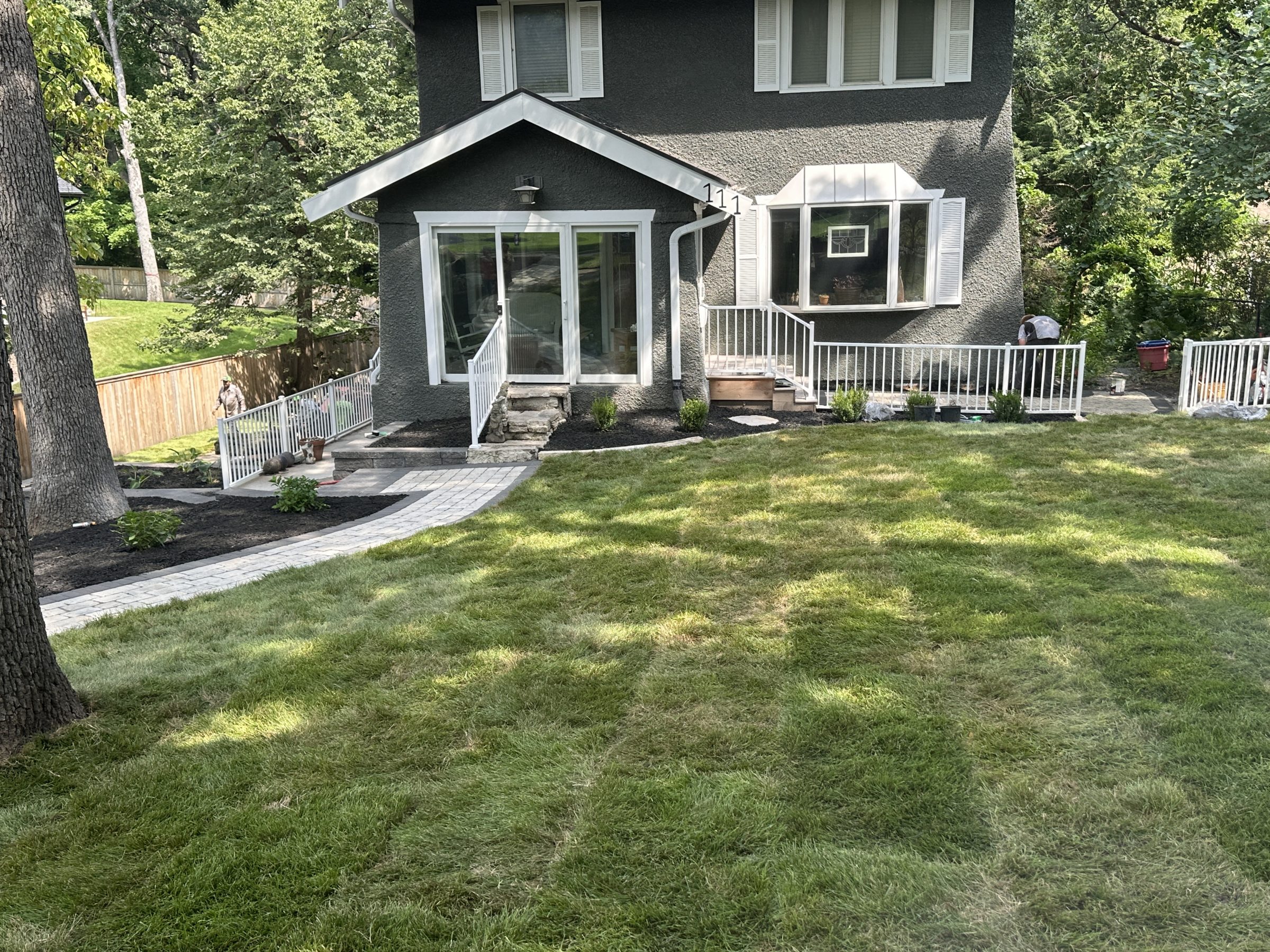
A perpetually wet lawn is a solvable problem, but the right fix depends entirely on your property’s unique footprint. While this guide outlines the common culprits, only an on-site assessment can pinpoint exactly where your water is originating and what it will take to move it away for good.
Brilliant Borders designs and builds custom drainage, grading, and hardscape solutions across the greater Des Moines metro. If you are ready to stop waiting for your lawn to dry out, request a quote to schedule a site visit and let us build a permanent solution for your property.
Tags: